As I woke, I heard the wind howl across the campground. I had this sick feeling in my stomach like I’d possibly chosen an awful day for this tour. I checked the forecast and saw that not only was the wind sticking around for the day, the swell was picking up to a small six metres. Having developed a predisposition to travel sickness since I have no idea when, this was not the news I needed knowing I’d be spending eight hours on a boat.
Already I was preparing myself for a less than mediocre journey. It was the tail end of the whale shark season, and with the predicted conditions, visibility was likely to be low and the tour was likely to consist of crew trying to get us excited about the omnipresent humpback whale sightings in the distance.
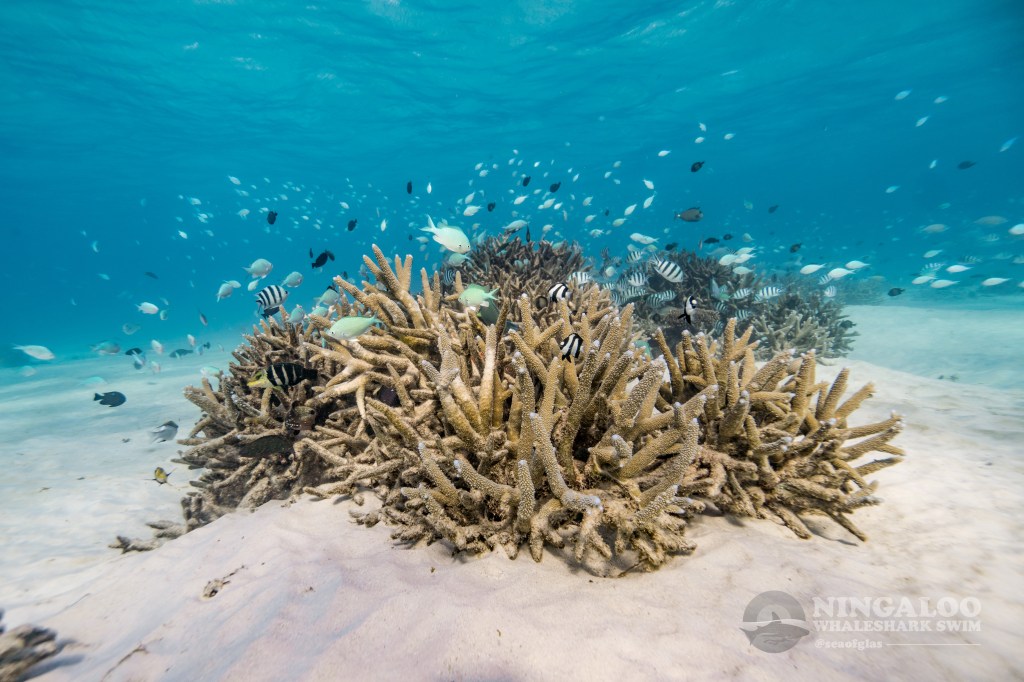
It started with our first snorkel for the day. The swell had not quite arrived yet and hopping in the water had actually made me feel so incredibly at peace like it always does. We were dumped on the outer Ningaloo reef, surrounded by beautiful, large and varying coral bommies. Some were neon blue, some were bright green. Cauliflowers, mushrooms, skeletons all words that come to mind when I think of describing their shape. There were a plethora of reef fish right across the reef. Parrot fish, zebra fish, a big sting ray. Fish that were long and skinny, fish that were short and fat. Fish that looked like paper floating in the breeze, fish with big juicy lip-smacking lips. The colours ranged right across the rainbow, from blues and greens to yellows and blacks. Everywhere you looked, the reef was truly alive.
While all of this was incredible to see, so many folk I had spoken to about their time on the reef had made mention of their sightings of the some of the big ticket fauna like turtles, sharks and even dugongs. I was trying to be humble about it all, the whole “be grateful for what you’re seeing” dance, however, I’d be lying if I said I wasn’t slightly disappointed. I could see the size of the swell brewing and no amount of sea sickness tablets was going to stop my tummy from turning.
I had initially booked the tour for a couple days prior, but cancelled due to not knowing what my plans were going to be. On that day, the seas were calm and the wind was absent. I was cursing myself for not choosing a day that I wouldn’t feel the contents of my breakfast slide up and down my oesophagus.
So there we were, blasting our way through this swell trying to make our way to the southern end of Cape Range National Park where we’d supposedly find ourselves our beloved big spotty fish, a cheeky hour long journey. I’m at the back of the boat, meditating, breath working, drinking peppermint & ginger tea praying to Poseidon to be kind to me. The countless scores of whales we encountered helped to take my attention away from my gold-medal worthy trapezal tummy, as the whales were putting on show near and far.
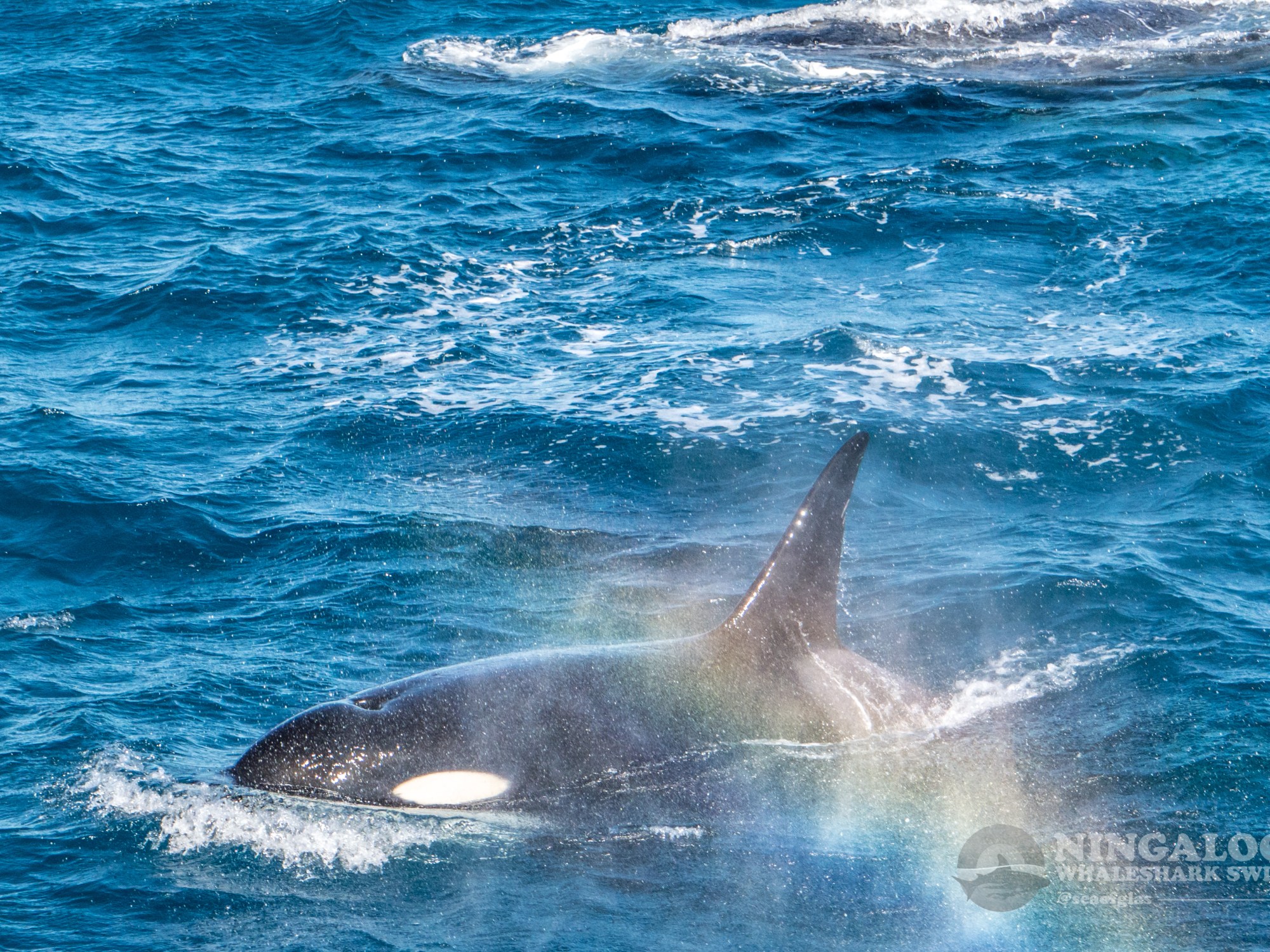
While sitting around, I overheard a crew member radio up to the spotter plane. “Orcas?” he said. My ears pricked up. “A pod of Orcas?”. Whoah whoah whoah, hold up. Whats going on here. “With whales?”. The spotter plane had not only spotted a pod of orcas, but the orcas were engaged in a hunt, and had targeted a whale calf.
Our boat, along with about five others slowly and cautiously approached the action. About a hundred metres away, we saw the hunt unveiling. There was a pod of five orcas working together to separate mum from bub. Two were focused on bub, launching themselves on top to try and keep it from surfacing to breathe, and the other three were keeping mum busy. The pod worked together, taking it in turns with their various roles. Mum was trying to use here big tail to swoosh them away, pectoral fins to swipe them, but the orcas were too much for her.
I was craving to see what was going on under the surface. The orcas were spy-hopping, duck diving, swimming side by side, splashing about. So much was going on, and for quite a while. I even had time to run to the back, destroy the side of the boat, and run back to the front to see more of the action. No amount of sea sickness was going to stop my eyes from taking in nature at its peak.
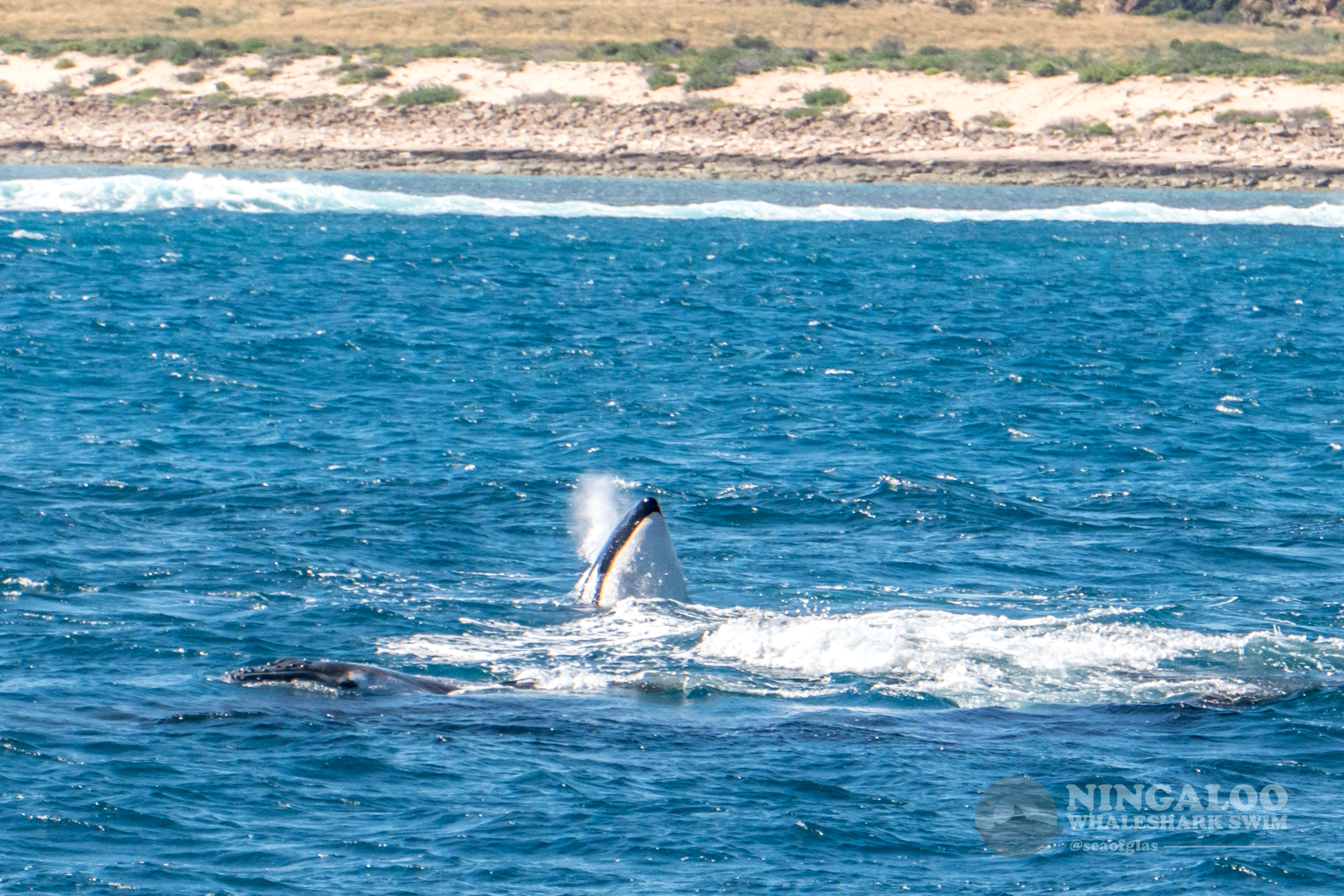
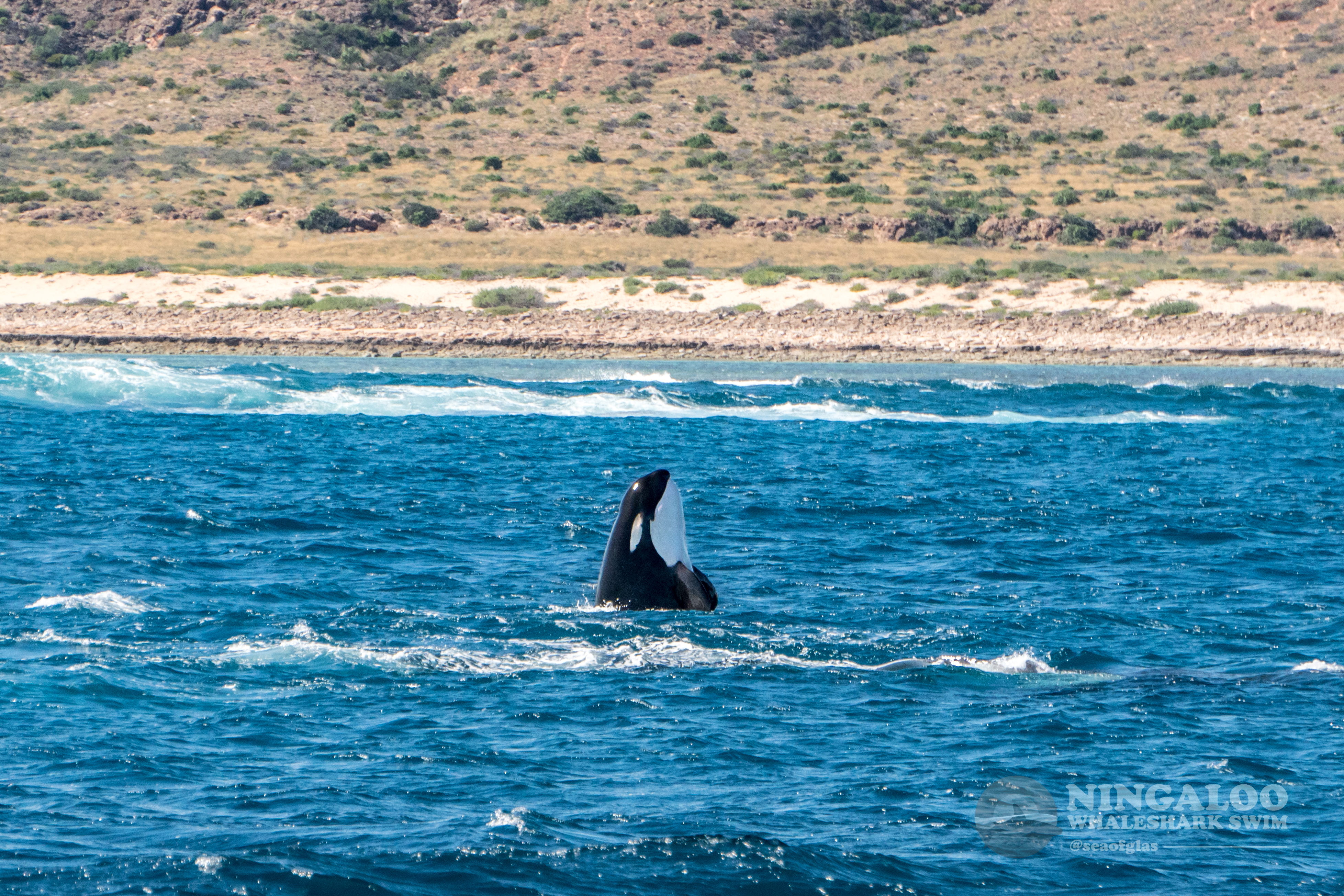
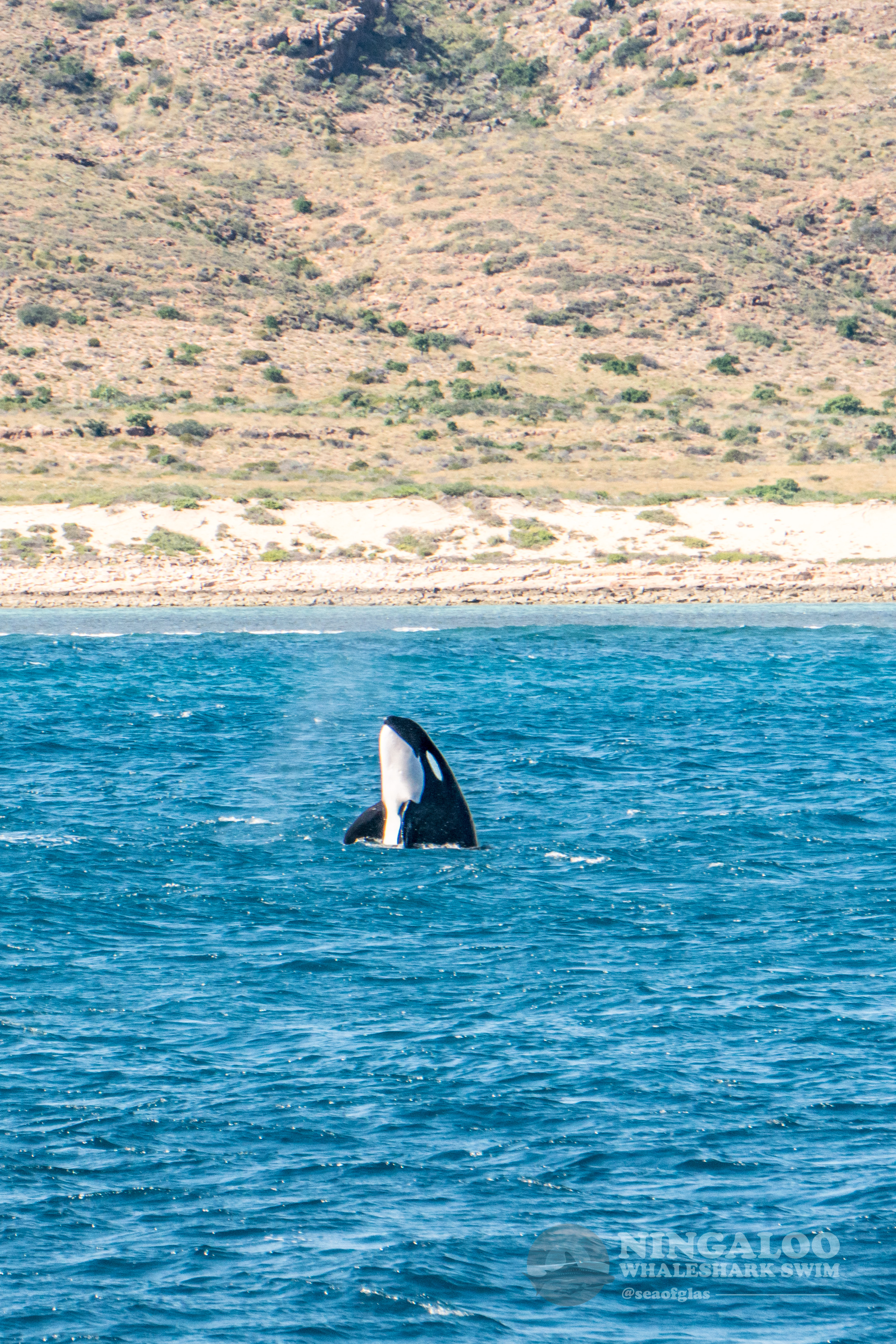
A behaviour known as “spy-hopping”, when the orcas bring their eyes out of the water so that they can physically see whats going on above the surface. By far one of the coolest cetacean behaviours to observe. All photos by Ningaloo Whale Shark Swim Swim.
After over an hour of observing this Attenborough-like event unfold, the spotter plane had radioed in a sighting of a whale shark and we left the action and continued our journey south. We were fast approaching the location of the whale shark and the crew yelled out for us all to suit up and get ready to swim with the biggest fish in the sea. We were all suited up and ready to go when two more whales appeared in our vicinity.
The crew were slightly hesitant to get us in the water, and rightly so. Not long after the whales appeared, the pod of orcas were back and headed straight for these two. It’s all a bit of blur – either from the sea sickness or the adrenalin, but what I remember is another three whales appearing – assumedly males. What was unusual was that these whales were not travelling in any one direction. These three males, and the second mum and calf kept themselves within the vicinity of the boats. We speculated that the whales were communicating about the threat of the orcas, and were seeking solace.

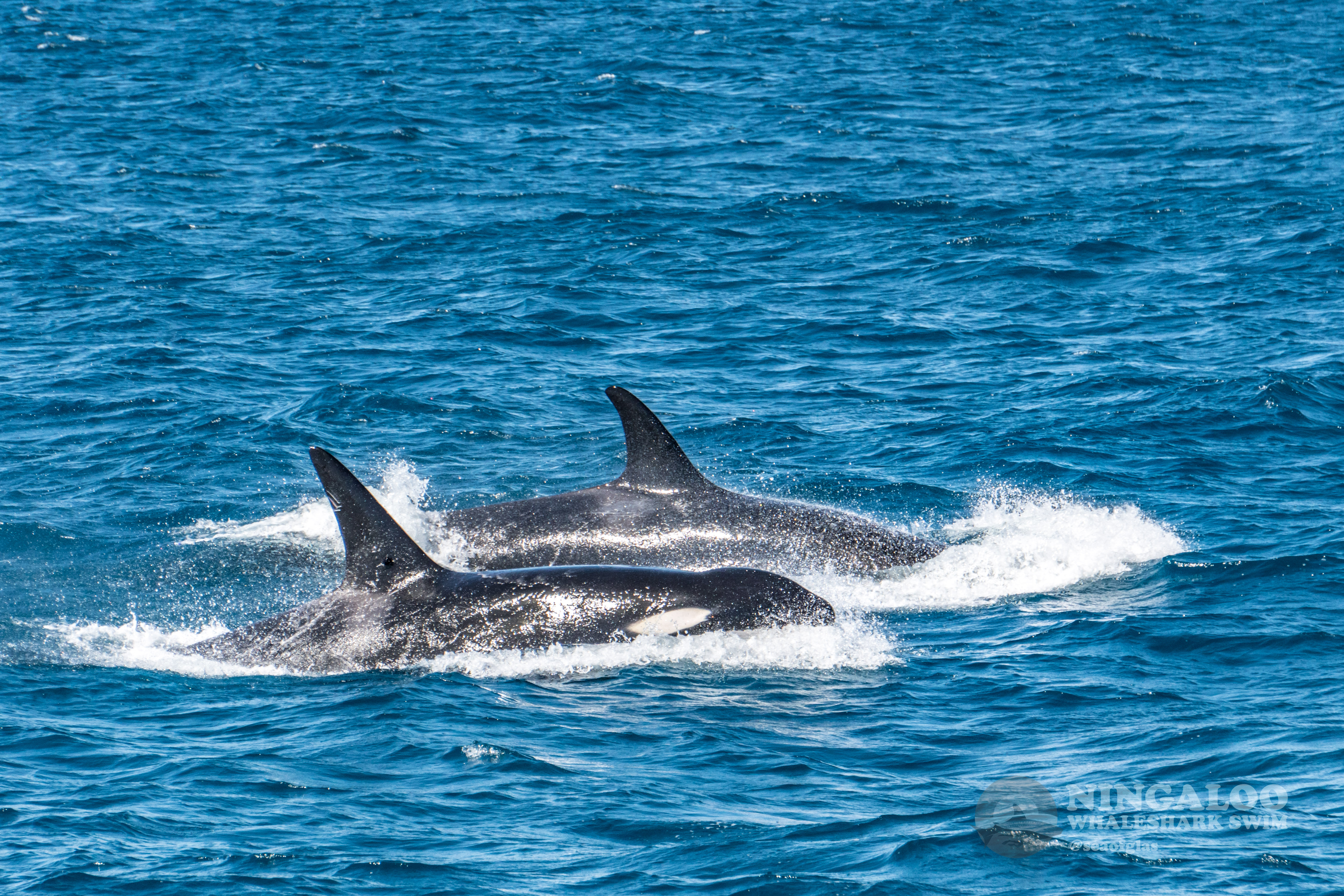

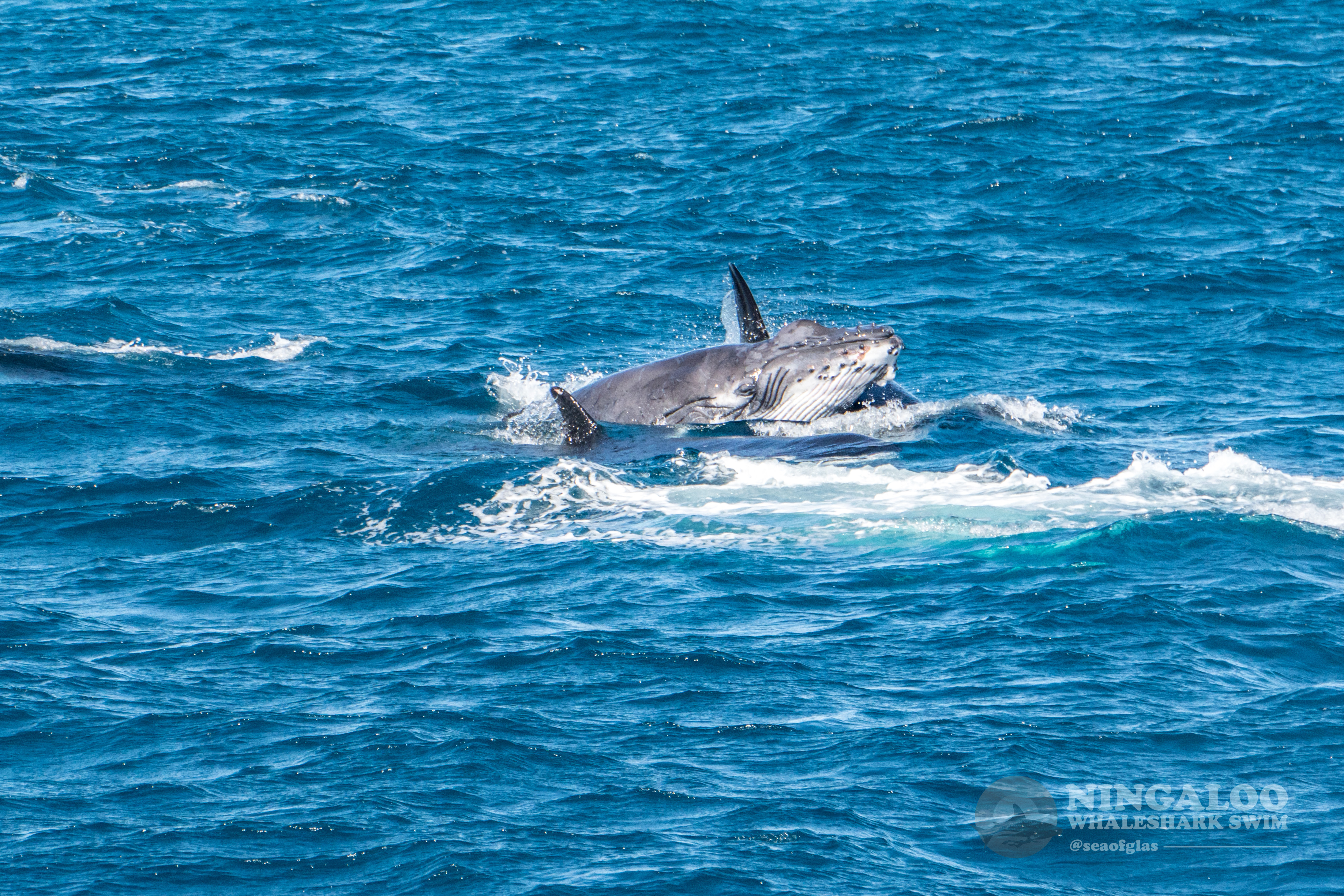
The hunt. All photos by Ningaloo Whale Shark Swim.
After some time, the orcas had moved on south, and whales continued north. At long last, the call was made to suit up an get ready to jump in the water with the whale shark, but after all of what we had just witnessed, it felt somewhat inconsequential. The swim itself was super quick as we entered the water in front of the whale shark, waited for it to come near us, swam like crazy to try and keep up, then just like that, it was out of sight
This is the part about tours that I find most challenging. It all feels so purposeful and expected, and that the reason for the experience is for the photo. No real time spent truly engaging with nature in all its glory. I understand the purpose of it all, but it just adds to the desire to go and experience it for yourself without a tour. Of course so few people have the means to do so, and this is a huge part of conservation of these animals and the environments they live in, but it’s always an ethical pickle I find myself in when doing such things. Six boats, all with two groups, jumping in on this fella to get a glimpse. Yet I mean, it’s all for a very small part of their journey, and only a small portion of the population would be experiencing this. I wonder what he was thinking. “What the hell are these humans doing, they look so silly with their big googly eyes and their breathing tube. And, they arre so slow. Ooh look plankton, gulp”.
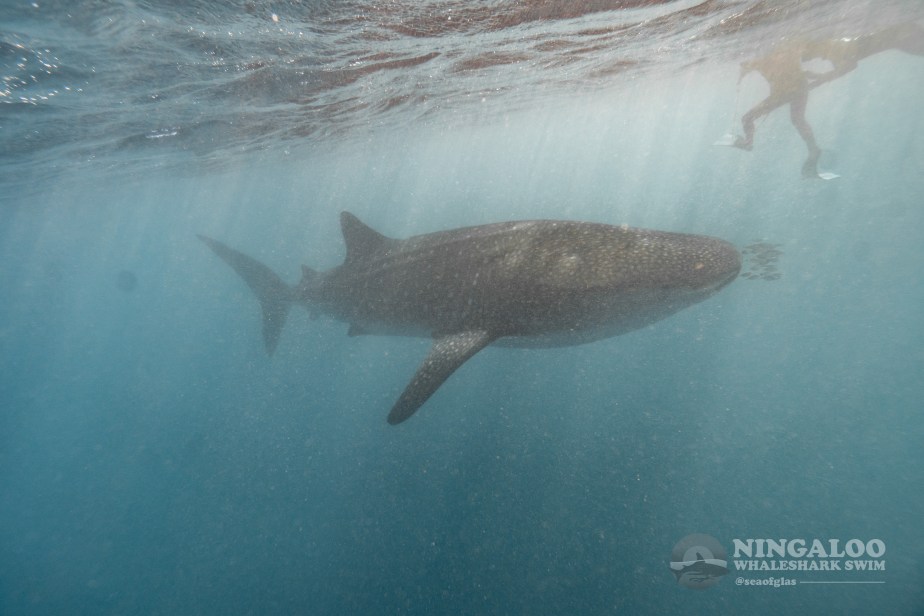
Although short-lived, the experience didn’t take away from how remarkable whale sharks are. The one we encountered was a man on mission, but generally quite slow swimming for an ocean creature (it’s believed that the Ningaloo population of whale sharks are juvenile males, with little to no sexy time observed). There was about ten seconds of swimming by his side where I gazed upon him trying to take in his features. I looked at his big square head and his huge gulping mouth surrounded by a goatee of small fish. I gazed upon his body, his spots, his fins and the muscular lines down that traced his shape. And as he swam off into the distance, his big gentle tail slowly moving side to side. He was beautiful.
While it was such a small interaction, my stoke was still so high from the predator-prey action just witnessed, and I was just happy to be in the water. The journey home was with the swell rather than against it, and was much less taxing on the tummy. I sat on the bow watching the sun go down on the Indian Ocean. The events of the day started to sink in, what I had just witnessed, a day full of continual awe. Full credit to the crew at Ningaloo Whale Shark Swim for a truly memorable experience, and a huge thank you to the team who gifted me this experience. Heart full of wow.
 restlessbrowneyes